
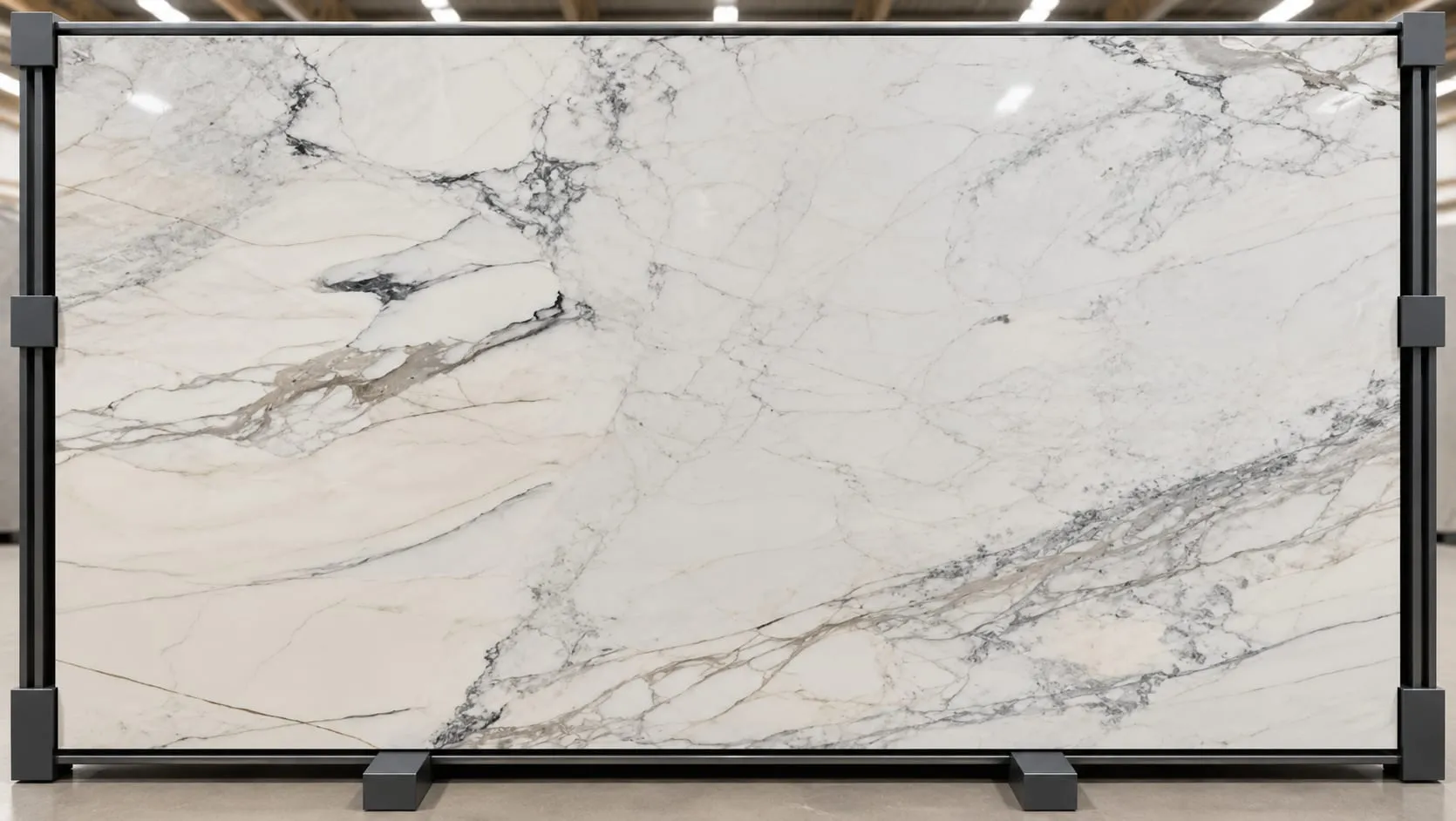
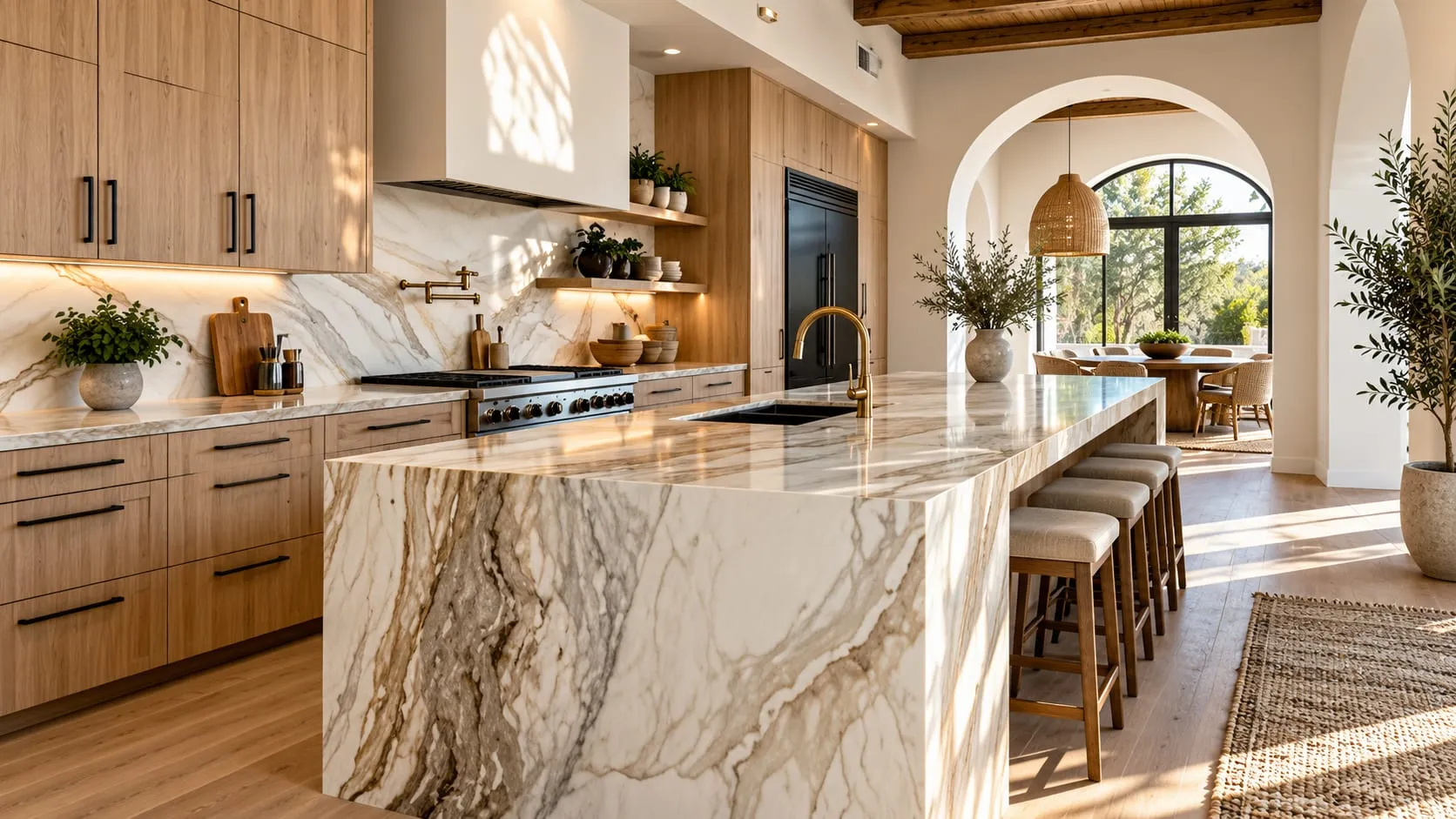
Stone types guide
Understanding stone types
Natural stones and engineered surfaces look alike in photos and behave very differently in a kitchen. This guide explains how each material forms, how it looks, how it stands up to daily life and what to check before you buy.
Material basics
Comparison at a glance
Qualitative, typical behaviour. "High" scratch resistance means better for daily use, not scratch-proof. Select a material name to jump to its full section.
| Material | Natural or engineered | Typical appearance | Scratch resistance | Heat | Staining and etching | Maintenance | Common applications |
|---|---|---|---|---|---|---|---|
| Granite | Natural | Crystalline, speckled or flowing; huge colour range | High | Good; still use trivets | Stains if unsealed (varies by slab); little acid etching | Neutral cleaner; seal periodically | Kitchens, vanities, fireplaces, outdoor |
| Marble | Natural | Soft, luminous, veined | Low to moderate | Moderate; trivets essential | Stains if unsealed; etches readily with acids | Neutral cleaner; seal often; expect patina | Vanities, showers, fireplaces, light-use kitchens |
| Quartzite | Natural | Marble-like veining or crystalline layers | Very high (true quartzite) | Good; still use trivets | Stains if unsealed (varies); true quartzite does not etch | Neutral cleaner; seal as advised | Kitchens, vanities, fireplaces, outdoor |
| Engineered quartz | Engineered | Uniform; speckled or printed veining | Good | Limited; resin can scorch | Highly stain-resistant; harsh chemicals damage resin | Soap and water; no sealing | Kitchens, vanities, commercial (indoor) |
| Porcelain | Engineered | Printed marble, stone or concrete looks; thin slabs | Very high | Excellent | Highly stain-resistant; no etching | Minimal; no sealing | Kitchens, fireplaces, showers, outdoor, cladding |
| Travertine | Natural | Earthy bands or clouds with small voids | Low | Good for fireplaces | Porous; etches with acids | Seal regularly; refill voids over time | Floors, walls, fireplaces, bathrooms |
| Limestone | Natural | Matte, even, sometimes fossil-rich | Low | Good for fireplaces | Porous; etches with acids | Seal regularly; neutral cleaners | Fireplaces, floors, walls |
| Onyx | Natural | Translucent flowing bands | Low | Poor | Porous; etches readily | Seal; gentle use only | Backlit features, powder-room vanities, accents |
| Soapstone | Natural | Matte grey-green to charcoal; darkens when oiled | Low (but easy to repair) | Excellent | Non-porous; no etching | Oil or wax for even colour; sand out marks | Kitchens, sinks, stove surrounds |
| Dolomite | Natural | White and grey veining, marble-like | Moderate | Moderate; trivets | Porous; etches (slower than marble) | Neutral cleaner; seal regularly | Vanities, showers, careful kitchens |
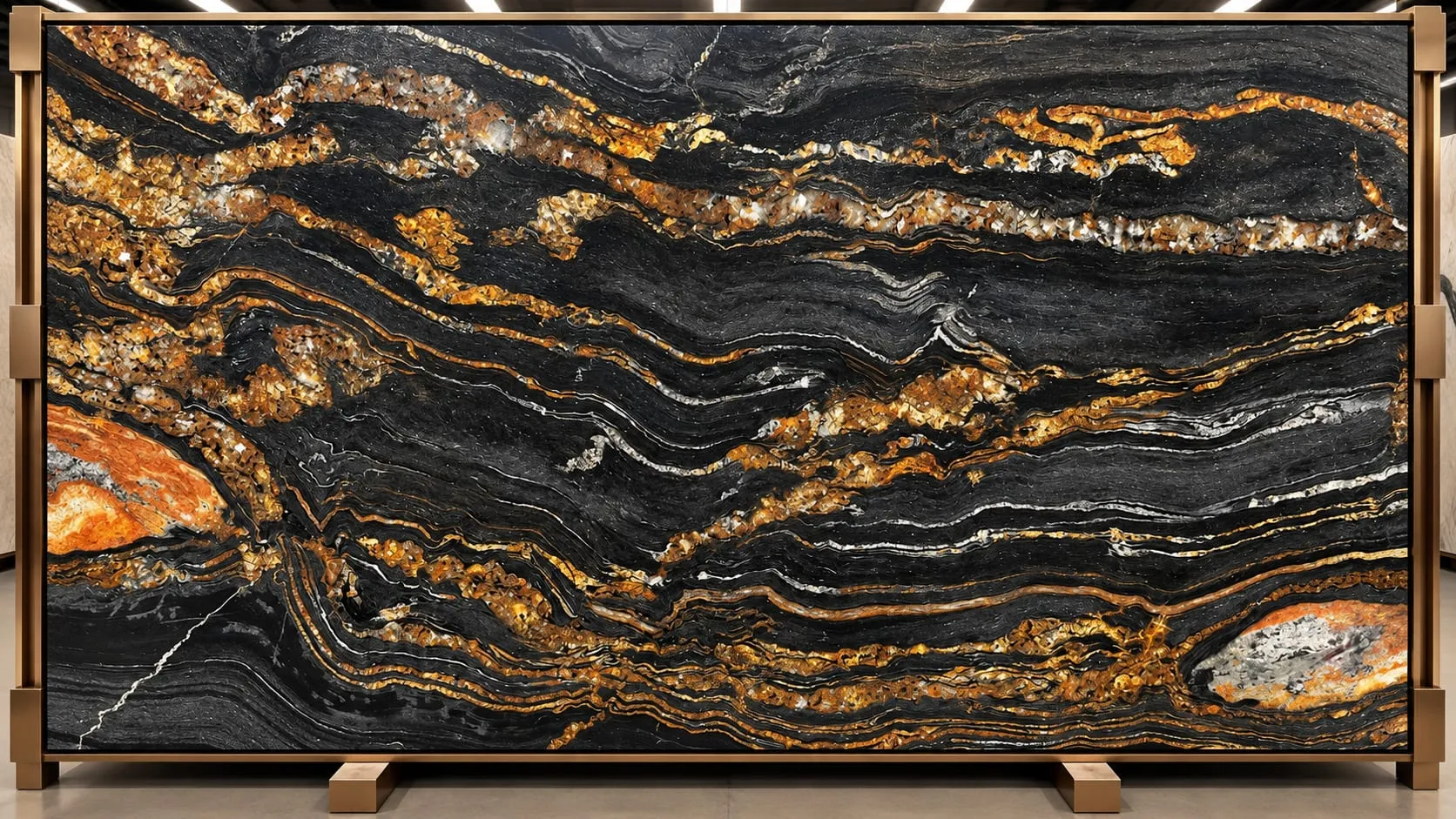
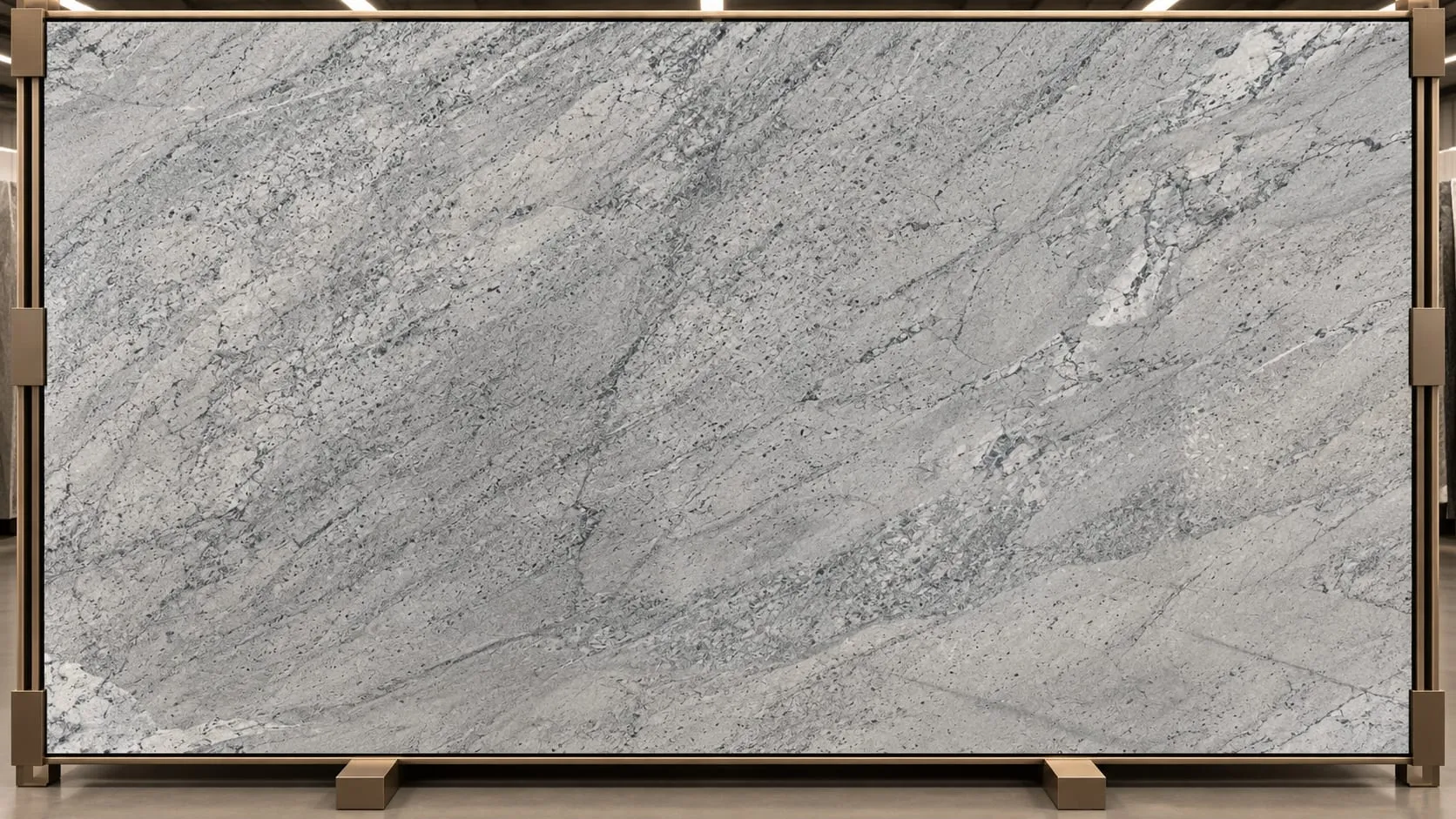
Hot cookware: no countertop manufacturer recommends placing pans straight from the burner on the surface. Use trivets on every material and follow the product’s own guidance.
Start here
The basics: what every buyer should know
Natural stone versus engineered surfaces
Natural stone (granite, marble, quartzite, soapstone, travertine, limestone, onyx, dolomite) is quarried from the earth and cut into slabs. Every slab is unique, and its hardness, porosity, mineral content and finish decide how it behaves. Engineered surfaces (engineered quartz and porcelain) are manufactured, so they are consistent from slab to slab, but each product has its own limits set by how it is made.
Quartzite is not quartz
The names are similar; the materials are not. Quartzite is a natural metamorphic rock made of fused quartz grains, usually very hard and not affected by acids. Engineered quartz is ground quartz bound with resin in a factory: non-porous, uniform, and sensitive to heat and sunlight. They are cared for differently and priced differently.
Staining versus etching
A stain is something that soaks into the stone, such as oil, wine or coffee entering a porous surface. Sealing slows this down. An etch is a chemical reaction: acids (lemon, vinegar, tomato, wine, many cleaners) dissolve a microscopic layer of calcium-based stones such as marble, limestone, travertine, onyx and dolomite, leaving a dull or lighter spot. No sealer prevents etching; it is a property of the stone itself.
Sealing
A sealer is an impregnating liquid that sits in the pores of natural stone and slows absorption. How often a stone needs it depends on its porosity, finish and use. A simple test: leave a few drops of water on the surface for ten minutes. If the stone darkens, it is time to re-seal. Engineered quartz and porcelain do not need sealing.
Interactive
Not sure where to start? Answer four questions
We will suggest two or three materials worth reading about and seeing in person, with the reasons. It is a starting point for a conversation, not a verdict.
01 Natural stone
Granite
The dependable all-rounder: hard, heat-tolerant and available in an enormous range of colours.
What it is
Granite is an igneous rock. It formed as molten rock cooled slowly deep underground, giving minerals such as quartz, feldspar and mica time to grow into the visible crystals that make up its speckled texture. In the stone trade, "granite" is also used for other hard crystalline stones (gneiss, gabbro and similar) that behave much like true granite, so the name describes a performance family as much as a strict geological type.
How it looks
Most granites have a granular, crystalline look: flecks, grains and clusters of mineral rather than soft veins. Some slabs show flowing movement, waves or large crystals. Polished finishes are the most common; honed (matte) and leathered (lightly textured) finishes are increasingly popular and change both the look and how fingerprints and crumbs show.
Colours and patterns
Black, charcoal, grey, silver, white, cream, gold, brown, bordeaux, blue and green. Pattern ranges from fine, even speckling to bold swirls.
Typical applications
- Kitchen countertops and islands
- Bathroom vanity tops
- Fireplace surrounds and hearths
- Outdoor kitchens and barbecue surrounds
- Flooring and stair treads
- Commercial counters and reception desks
How it holds up
- Scratching
- Very good for everyday use; granite is among the harder countertop stones. Knives will dull on it, which is one reason to keep using a cutting board.
- Heat
- Tolerates warm pots better than resin-based surfaces, but sudden extreme heat can crack a slab or damage factory resin and sealer. Use trivets and check the supplier’s guidance.
- Staining
- Porosity varies by slab. Dense dark granites may absorb very little; lighter or more open-grained granites can absorb cooking oil, wine or coloured liquids if they are not sealed.
- Etching
- Granite is a silicate stone and is not generally affected by food acids such as lemon, vinegar or tomato. A few stones sold as granite contain reactive minerals, so a sample test is still worthwhile.
Maintenance and sealing
Wipe with warm water and a pH-neutral stone cleaner. Re-seal when a few drops of water left on the surface darken the stone within a few minutes instead of beading. Many slabs arrive factory resin-treated, which reduces how often sealing is needed.
Trade-offs
- Heavy; long runs usually need a seam, which will be visible to some degree
- Pattern and colour vary from slab to slab and from the small sample you first saw
- Some slabs contain natural fissures, pits or resin-filled areas
- Very light granites can need more frequent sealing than dark ones
A good fit for
Busy family kitchens, outdoor kitchens, rental or multi-family projects, and anyone who wants genuine natural stone with the least day-to-day fuss.
Verify for the specific slab or product
- Whether the specific slab is resin-treated and what sealer is recommended
- How porous the slab is (ask for a water test on the actual slab)
- Whether any fissures or fills are present and where seams would fall
- Finish availability (polished, honed, leathered) for that colour
02 Natural stone
Marble
Timeless veined elegance that rewards a little care and accepts a living patina.
What it is
Marble is a metamorphic rock that began as limestone. Heat and pressure recrystallised the calcium carbonate into the interlocking, slightly translucent crystals that give marble its soft glow. Because it is mostly calcite, marble is comparatively soft and reacts with acids.
How it looks
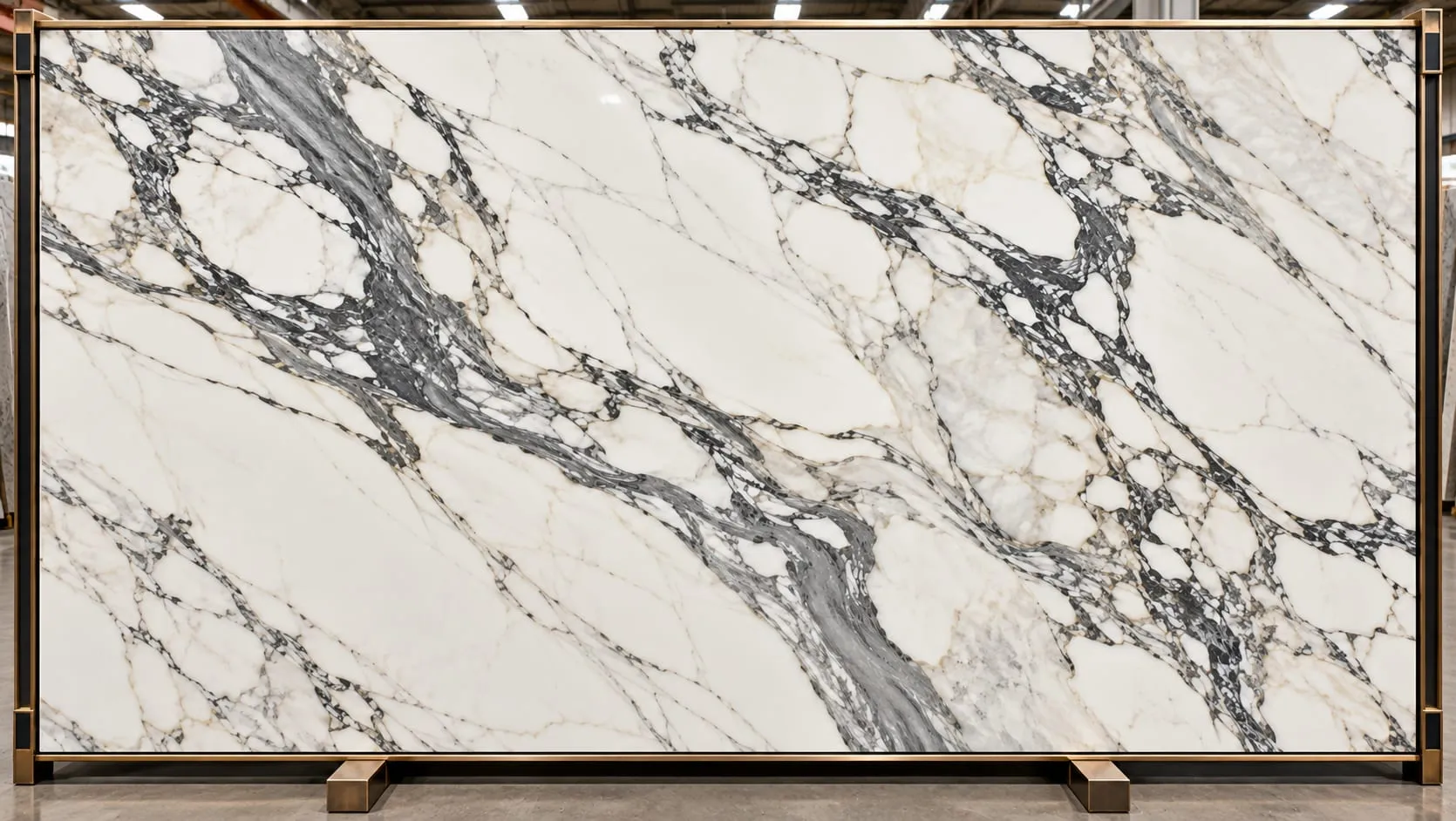
A luminous, fine-grained background crossed by veins of grey, gold, green or rust. Polished marble is glossy and shows veining vividly; honed marble is matte, feels silky and hides wear better.
Colours and patterns
White and grey (Carrara, Calacatta and Statuario types), cream and beige (Crema Marfil type), gold, green, red (Rosso Verona type) and black.
Typical applications
- Bathroom vanity tops
- Shower walls, tub decks and bathroom floors
- Fireplace surrounds
- Kitchen countertops and islands for owners who accept patina
- Baking areas (naturally cool to the touch)
- Furniture, tabletops and feature walls
How it holds up
- Scratching
- Softer than granite or quartzite. Grit under a pan, dragged cookware or a dropped knife can leave marks, and polished surfaces show them most.
- Heat
- Handles moderate heat but is vulnerable to thermal shock; a hot pan straight from the burner should always go on a trivet.
- Staining
- Porous. Oil, wine, coffee and coloured liquids can soak in if the surface is unsealed or the sealer has worn.
- Etching
- Highly sensitive. Lemon juice, vinegar, wine, tomato and many household cleaners dissolve a tiny layer of the surface and leave dull spots. Sealers slow staining but do not prevent etching.
Maintenance and sealing
Use only pH-neutral cleaners made for stone; wipe spills promptly; re-seal regularly. A honed finish makes etch marks far less visible. Worn polished marble can be professionally re-honed or re-polished.
Trade-offs
- Etches and scratches with normal kitchen use, so it develops a patina over time
- Needs consistent sealing in kitchens and bathrooms
- Veins can be weaker lines in the slab and need careful handling in fabrication
- Pattern varies widely between slabs; book-matching needs sequential slabs
A good fit for
Bathrooms, fireplaces, low-traffic kitchens, bakers, and anyone who loves the look and is comfortable with a surface that ages.
Verify for the specific slab or product
- Whether the slab is a true marble or a dolomite or quartzite sold under a marble-style name
- Honed versus polished finish, and whether an etch test on a sample matches your expectations
- The sealing schedule the supplier recommends for that stone
- Whether the slab is resin-treated or mesh-backed
03 Natural stone
Quartzite
A natural stone that often looks like marble but is usually far harder. Not the same as engineered quartz.
What it is
Quartzite is a metamorphic rock formed when quartz-rich sandstone was heated and compressed until the sand grains fused into a dense, interlocking mass. It is mostly natural quartz, one of the hardest common minerals. It is quarried and cut into slabs like granite and marble. Despite the similar name, it is not engineered quartz, which is a factory-made product bound with resin.
How it looks
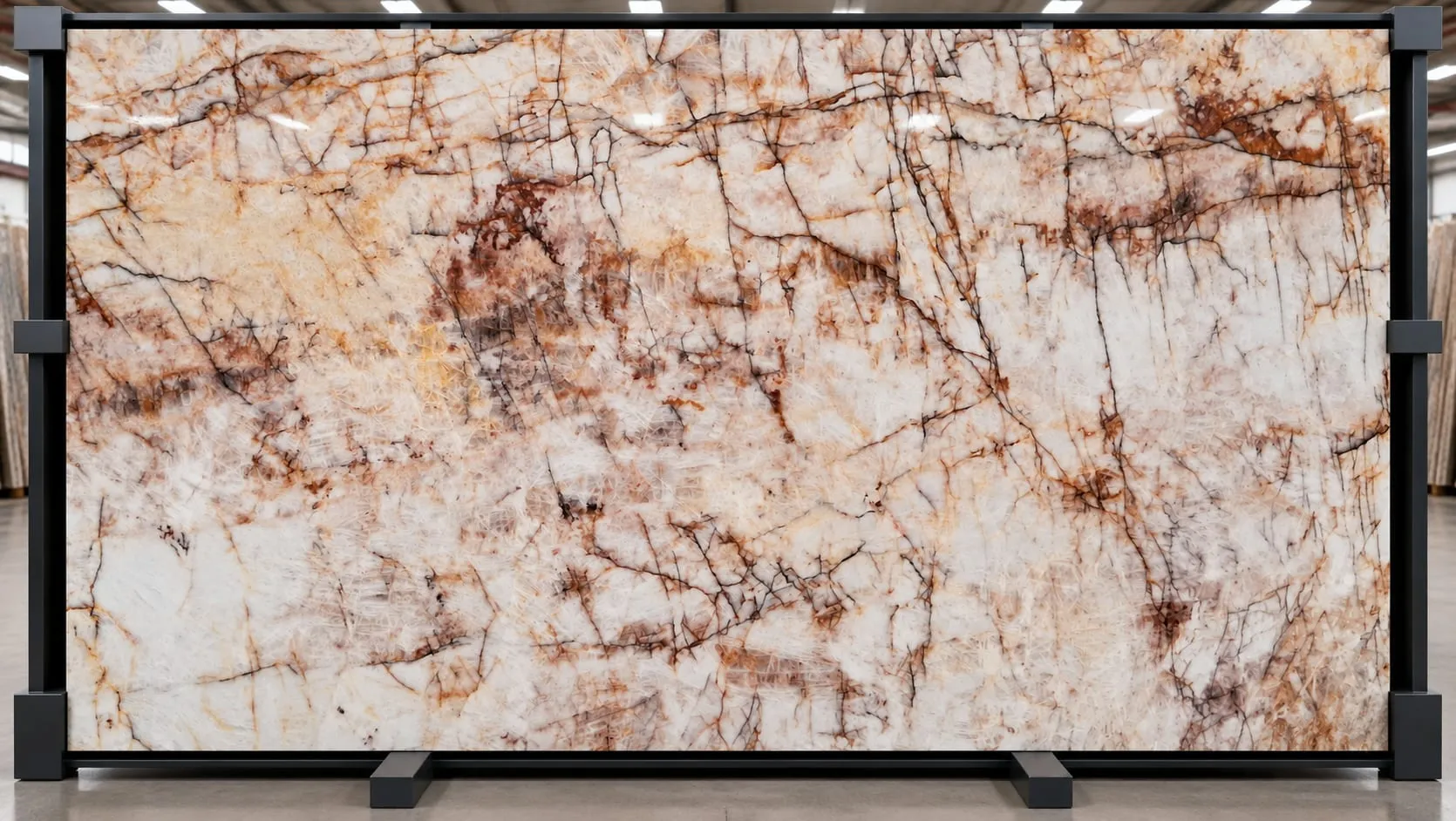
Ranges from soft, marble-like veining (the Taj Mahal and Calacatta-style quartzites) to crystalline, layered or sparkling surfaces. Many slabs have a depth or translucence that photographs flatten, so they are best seen in person.
Colours and patterns
White, cream, soft gold, grey and silver are common; blue, green, teal and dramatic multi-colour slabs also exist.
Typical applications
- Kitchen countertops and islands
- Bathroom vanity tops
- Fireplace surrounds and feature walls
- Outdoor kitchens (many quartzites are UV-stable; confirm for the slab)
- Flooring and stair treads
How it holds up
- Scratching
- Typically harder than granite; true quartzite resists scratching very well. Fabricators find it hard to cut, which is a good sign for durability.
- Heat
- Generally tolerates heat well, but trivets are still recommended to protect any resin treatment and avoid thermal shock.
- Staining
- Porosity varies a great deal. Some quartzites are dense; others are surprisingly porous and need diligent sealing to resist oil and water marks.
- Etching
- True quartzite is not etched by household acids. However, some stones sold as "quartzite" or "soft quartzite" are actually marble or dolomite and will etch. Ask for an acid test on the slab you are buying.
Maintenance and sealing
Neutral stone cleaner; seal as the supplier recommends and re-test with water drops periodically. Resin-treated slabs usually need less frequent sealing.
Trade-offs
- Often more expensive than granite, partly because it is harder to fabricate
- Mislabelling is common in the trade; verify the stone, not just the name
- Some varieties are porous and will show water or oil marks without sealing
- Slabs can contain natural fissures or crystal pockets
A good fit for
Busy kitchens that want a marble look without marble’s etching, outdoor kitchens, and anyone who wants natural movement with high durability.
Verify for the specific slab or product
- An acid (lemon) test and a scratch test on the actual slab to confirm it is true quartzite
- Porosity and the recommended sealer and schedule
- Whether the slab is resin-treated or mesh-backed
- Outdoor and UV suitability for that specific stone
Not in our photographed catalog yet: ask about availability How engineered quartz is made
04 Engineered surface
Engineered quartz
A manufactured surface: uniform, non-porous and easy to live with, but sensitive to heat and sunlight.
What it is
Engineered quartz is made in a factory from ground natural quartz (sometimes with glass or other minerals) mixed with polymer resins and pigments, then pressed, cured and polished into slabs. The resin is what makes it non-porous, and it is also what sets its limits. It is not a quarried stone, and it is different from natural quartzite.
How it looks
Consistent from slab to slab. Styles range from plain speckled colours to printed or layered veining that imitates marble, plus concrete and textured looks. Polished, matte and lightly textured finishes are offered by most brands.
Colours and patterns
Virtually any colour. Whites, greys and marble-look veining dominate; darker and solid colours are available.
Typical applications
- Kitchen countertops and islands
- Bathroom vanity tops
- Laundry and utility rooms
- Commercial counters and reception desks
- Generally indoor only: resins can discolour in direct sunlight (check the manufacturer)
How it holds up
- Scratching
- Good for daily use, though knives and abrasive pads can scratch the surface, and polished dark colours show marks most.
- Heat
- The weakest point. Hot pans, slow cookers and some appliances can scorch or discolour the resin, so trivets are essential. Each manufacturer publishes its own temperature limits.
- Staining
- Non-porous, so most food stains wipe away. Some strong dyes, permanent markers and certain chemicals can leave marks.
- Etching
- Not etched by food acids. Harsh chemicals such as bleach, oven cleaner, solvents or strongly alkaline products can damage the resin.
Maintenance and sealing
Soap and water or a mild cleaner. No sealing is required. Avoid harsh chemicals and follow the brand’s care sheet to keep any warranty valid.
Trade-offs
- Heat and UV sensitivity
- Seams are visible in veined patterns, and patterns are repeated rather than unique
- Difficult to repair invisibly if chipped or scorched
- Not in our supplied product photos yet: ask about availability
A good fit for
Households that want a uniform look and minimal upkeep, rental properties, and designers who need an exact colour match across several rooms.
Verify for the specific slab or product
- The manufacturer’s heat limits, care instructions and warranty conditions
- Whether the specific product is rated for outdoor or sunny locations
- Slab size, thickness and available finishes
- Whether the pattern is printed on the surface or runs through the slab (matters for edges)
05 Engineered surface
Porcelain
Fired ceramic slabs that shrug off heat and stains, in thin large formats with printed stone looks.
What it is
Porcelain slabs are manufactured from refined clays, feldspar and mineral pigments pressed into large sheets and fired at very high temperatures until they become dense and almost glass-like. On most slabs the pattern is applied to the surface before firing; some products carry the pattern partly or fully through the body.
How it looks
Convincing marble, stone, concrete and metal looks in matte, satin or polished finishes. Slabs are typically thinner than natural stone (around 6 to 12 mm, with 20 mm versions available), which gives a crisp, modern edge.
Colours and patterns
Any printed design: white marble looks such as Arabescato and Calacatta types, greys, warm neutrals and dark dramatic patterns.
Typical applications
- Kitchen countertops and backsplashes
- Fireplace surrounds (high heat tolerance)
- Shower walls, tub surrounds and wet rooms
- Floors and wall cladding, including large-format panels
- Outdoor kitchens and facades (UV-stable; confirm product rating)
How it holds up
- Scratching
- The fired surface is very hard and resists scratching well. Polished finishes can show fine marks, and ceramic knives or abrasives can mark any finish.
- Heat
- Excellent. Porcelain is fired far above kitchen temperatures and is widely used around fireplaces, though sudden localised heat can still stress a thin slab.
- Staining
- Near-zero porosity means almost nothing soaks in. No sealing is needed.
- Etching
- Not affected by food acids or most household cleaners.
Maintenance and sealing
One of the lowest-maintenance surfaces: neutral or mild cleaners, no sealing. Follow the manufacturer’s guidance for polished finishes.
Trade-offs
- On most slabs the pattern does not run through the body, so cut edges show the plain core; mitred or specially treated edges are common
- Thin slabs can chip at edges or corners on impact, and fabrication demands specialised equipment
- Chips and cracks are difficult to repair invisibly
- Printed patterns repeat, and lack the depth of natural stone when viewed up close
A good fit for
Contemporary kitchens, fireplaces and feature walls, outdoor kitchens, and anyone who wants a marble look with almost no upkeep.
Verify for the specific slab or product
- Whether the pattern is surface-applied or through-body, and how edges will be finished
- Slab thickness and the support the fabricator recommends
- The manufacturer’s care sheet and any outdoor or UV rating
- Finish (polished finishes can be more delicate than matte)
06 Natural stone
Travertine
Warm, earthy limestone with a characterful pitted surface, best on floors, walls and fireplaces.
What it is
Travertine is a form of limestone deposited by mineral-rich water around hot springs. Gas bubbles trapped during formation leave the small voids that give travertine its signature texture. Slabs are sold with the voids filled (with colour-matched resin or cement) or left open.
How it looks
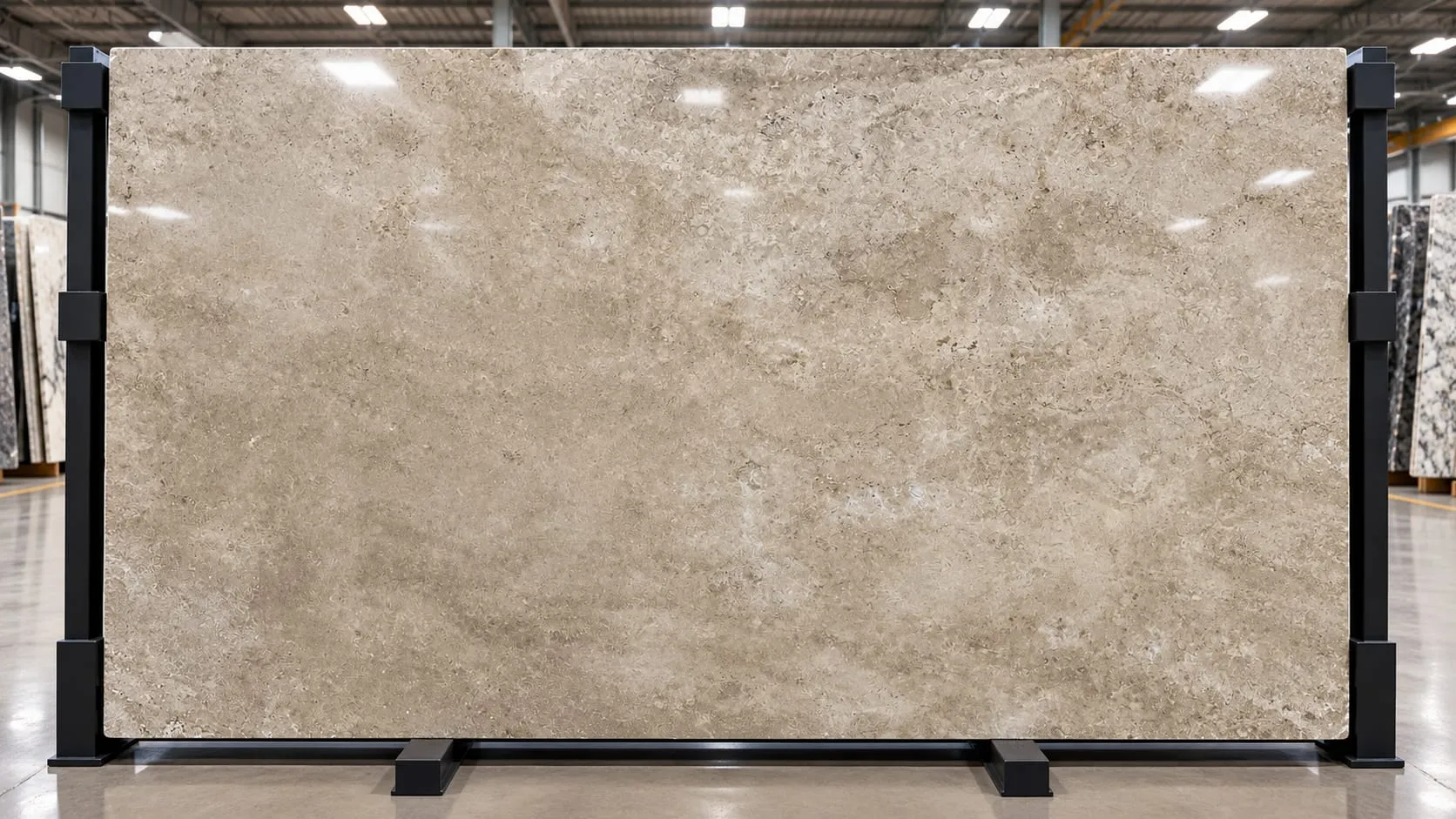
Earthy, layered or cloudy patterns. A "vein cut" shows linear bands; a "cross cut" shows a swirled, cloud-like pattern. Finishes include honed, tumbled, brushed and polished.
Colours and patterns
Ivory, beige, walnut and noce browns, silver-grey, and gold.
Typical applications
- Floors and stair treads
- Fireplace surrounds and hearths
- Wall cladding and feature walls
- Shower and bathroom walls (sealed and maintained)
- Vanity tops in low-use bathrooms
- Exterior paving in mild climates
How it holds up
- Scratching
- Soft. Grit, pet claws and dragged furniture can scratch it, which is why honed and tumbled finishes that hide wear are popular.
- Heat
- Copes well with the radiant heat of a fireplace surround.
- Staining
- Porous; it absorbs liquids readily unless sealed, and filled voids can loosen over time.
- Etching
- Calcium carbonate, so acids etch it just as they etch marble.
Maintenance and sealing
Seal on installation and on a regular schedule; use neutral cleaners; expect to refill occasional holes on floors over the years.
Trade-offs
- Not well suited to busy kitchen countertops
- Voids need filling and can reopen with wear
- Can suffer freeze-thaw damage outdoors in cold winters like those in the Uintah Basin
A good fit for
Rustic, Mediterranean and warm contemporary interiors: floors, walls, fireplaces and bathrooms.
Verify for the specific slab or product
- Filled or unfilled, and what the fill is made of
- Vein cut or cross cut
- Density grade and suitability for wet areas or outdoors
- Sealing recommendation for the finish chosen
Not in our photographed catalog yet: ask about availability
07 Natural stone
Limestone
Soft, even-toned sedimentary stone with a quiet, architectural character.
What it is
Limestone is a sedimentary rock made mostly of calcium carbonate from ancient marine sediment and shell fragments; some varieties contain visible fossils. It is softer and more uniform than marble because it has not been recrystallised by heat and pressure.
How it looks
Matte, subtle and consistent, usually honed rather than polished. Fossil-rich varieties show shells and sea creatures; others are almost plain.
Colours and patterns
Cream, buff, pale grey, blue-grey and soft gold.
Typical applications
- Fireplace surrounds and hearths
- Flooring in entries and living areas
- Wall cladding and exterior facades (density dependent)
- Vanity tops and tub decks in low-use bathrooms
How it holds up
- Scratching
- Soft; scratches and wears with grit and traffic.
- Heat
- Handles fireplace heat well.
- Staining
- Porous; needs sealing to resist oil and water marks.
- Etching
- Calcium carbonate: acids etch it readily.
Maintenance and sealing
Seal and re-seal on schedule, clean with pH-neutral products, and avoid acidic or abrasive cleaners.
Trade-offs
- Poor choice for busy kitchen countertops
- Density varies: some limestones are unsuitable for wet or exterior use
- Can show wear patterns in high-traffic floors
A good fit for
Fireplaces, floors and walls where a calm, matte stone is wanted and traffic is moderate.
Verify for the specific slab or product
- Density and porosity for the intended use
- Suitability for wet areas or exteriors
- Sealer and cleaning recommendations
08 Natural stone
Onyx
Translucent, banded and theatrical: a statement stone for backlit features rather than working counters.
What it is
The onyx sold for interiors is a banded, translucent form of calcite deposited slowly by mineral water in caves and springs. It is a carbonate stone like marble (not the quartz-family onyx of jewellery), so it shares marble’s sensitivities and is often even softer.
How it looks
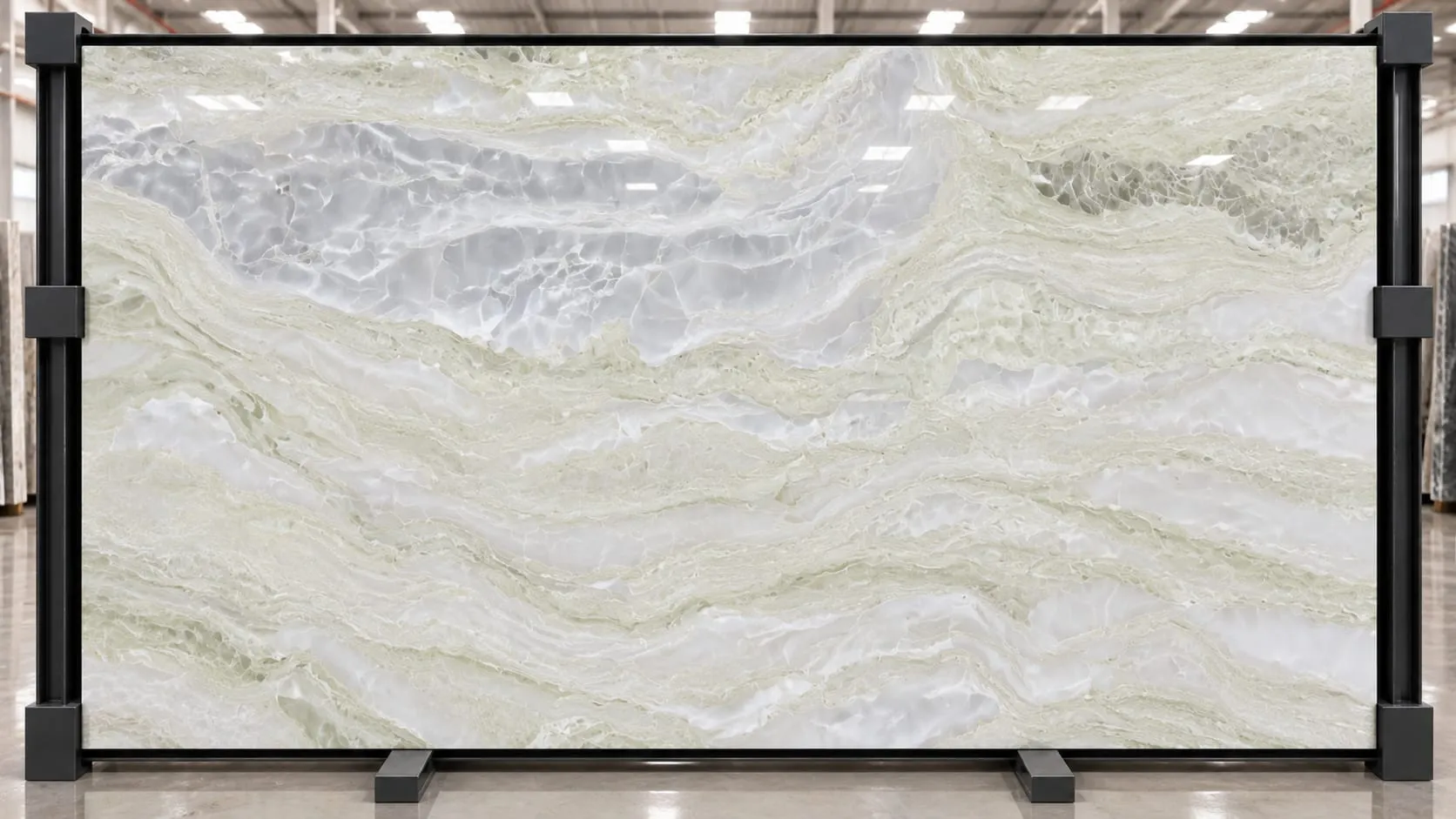
Flowing, translucent bands and swirls. Because light passes through it, onyx is frequently backlit, which makes the pattern glow.
Colours and patterns
Honey and amber, white, cream, green, pink, red and grey.
Typical applications
- Backlit bars, reception desks and feature panels
- Vanity tops in powder rooms
- Fireplace surrounds (decorative)
- Accent walls and furniture inlays
How it holds up
- Scratching
- Soft and easily scratched.
- Heat
- Avoid direct heat; it can crack or discolour.
- Staining
- Porous; absorbs liquids unless sealed.
- Etching
- Etches readily with acids.
Maintenance and sealing
Seal, clean gently with neutral products, and keep it away from acids and hard use.
Trade-offs
- Fragile: slabs are often mesh-backed and resin-reinforced and tend to be smaller
- Usually one of the more expensive options
- Unsuitable as a working kitchen surface
A good fit for
Designers and homeowners who want a dramatic, light-filled focal point in a low-use location.
Verify for the specific slab or product
- Slab size, backing and resin reinforcement
- Whether the slab is suitable for backlighting and how it will be supported
- Sealing and care guidance
09 Natural stone
Soapstone
Soft to the touch, immune to acids and heat, and happy to darken into a deep charcoal patina.
What it is
Soapstone is a metamorphic rock rich in talc, which gives it its soapy feel, along with harder minerals such as chlorite and magnesite. "Architectural" soapstone used for counters has less talc than carving soapstone and is noticeably harder, but it is still softer than granite.
How it looks
A matte, slightly waxy surface in grey-green to charcoal, often with faint white or green veining. Left untreated it stays lighter and mottled; oiled or waxed, it turns an even, deep charcoal.
Colours and patterns
Light grey, grey-green and charcoal; veining is usually subtle white, green or quartz lines.
Typical applications
- Kitchen countertops and islands
- Integrated and farmhouse sinks
- Fireplace and wood-stove surrounds (a traditional use)
- Laboratory-style and utility counters
How it holds up
- Scratching
- Soft: it scratches and dents, but shallow marks sand out easily with fine abrasive paper and a fresh coat of oil.
- Heat
- Excellent. Soapstone has been used for stove surrounds and hearths for centuries, and hot pans rarely trouble it.
- Staining
- Dense and non-porous, so it does not need sealing. Oils darken the surface rather than staining it, which blends into the patina.
- Etching
- Not affected by food acids; lemon, vinegar and wine are not a problem.
Maintenance and sealing
Optionally wipe with mineral oil or a soapstone wax every few weeks at first, then less often, to keep an even colour. Scratches are sanded out rather than polished. Any mild cleaner is fine.
Trade-offs
- Soft; edges and corners can chip and the surface shows marks
- Limited colour range, all in the grey family
- The oiled colour is dramatically darker than the dry slab: judge both before deciding
A good fit for
Traditional, farmhouse and heritage kitchens, keen cooks who want a forgiving heat-proof surface, and owners who enjoy patina.
Verify for the specific slab or product
- Hardness and talc content of the specific block (soapstones vary)
- How the slab looks both dry and oiled
- Thickness, and whether a laminated edge is planned
10 Natural stone
Dolomite
A marble look-alike that sits between marble and quartzite in hardness, and is often sold under other names.
What it is
Dolomite is a sedimentary carbonate stone made of calcium magnesium carbonate. It forms when magnesium-rich water alters limestone. Many white and grey "super white" or "soft quartzite" slabs on the market are in fact dolomite, as are stones marketed as "dolomitic marble".
How it looks
White to light grey with grey veining, visually much like marble. Polished and honed finishes are both common.
Colours and patterns
White, soft grey and silver with grey or charcoal veins.
Typical applications
- Kitchen countertops and islands (with care)
- Bathroom vanity tops and shower walls
- Fireplace surrounds
- Feature walls and furniture
How it holds up
- Scratching
- A little harder than marble but noticeably softer than true quartzite.
- Heat
- Moderate; use trivets.
- Staining
- Porous; needs sealing.
- Etching
- Yes. Dolomite etches with acids, usually a little more slowly than marble, but it does etch.
Maintenance and sealing
Treat it like marble: neutral cleaners, prompt wiping of spills and regular sealing.
Trade-offs
- Frequently mislabelled as quartzite, which leads to disappointed expectations in kitchens
- Etches and stains like marble, if slightly less readily
A good fit for
People who want a bright marble look and are prepared to care for it, especially in bathrooms and lighter-use kitchens.
Verify for the specific slab or product
- An acid test on the actual slab to understand how it will behave
- The supplier’s identification of the stone, not just its trade name
- Sealing recommendations and finish
Practical guidance
Choosing well
Educational considerations, not rankings. The right answer depends on your room, your habits and your taste.
Which material might suit a busy family kitchen?
Kitchens that see daily cooking, homework and spills reward surfaces that resist scratches, shrug off acids and need little sealing. Granite, true quartzite and porcelain are the natural first candidates among the materials we photograph, and engineered quartz is a popular low-maintenance choice if indoor use and trivet discipline suit the household.
Marble, dolomite, limestone and onyx can still be used in kitchens, but they will etch and mark. Some owners love that patina; others find it stressful. Be honest about which camp you are in before you fall for a slab.
Which materials can create a classic marble-like appearance?
Several stones and products offer white backgrounds with grey or gold veining. Natural quartzite varieties such as the Taj Mahal, Calacatta-style and Bianco Superiore types give a soft marble look with far better scratch and acid resistance. Dolomite looks almost identical to marble and behaves almost like it. Porcelain and engineered quartz reproduce marble patterns on a surface that does not etch.
Each choice trades something: quartzite costs more and must be verified as true quartzite; dolomite needs marble-style care; porcelain and quartz patterns repeat and lack natural depth. Looking at full slabs side by side is the quickest way to decide which trade-off you can live with.
Which options may be suitable for bathrooms?
Bathrooms are gentler on stone than kitchens, so marble, dolomite, travertine and onyx become realistic options alongside granite, quartzite, porcelain and quartz. The main hazards are cosmetics, toothpaste, hair products and standing water, so sealing still matters for porous stones.
For shower walls and floors, ask about slip resistance of the finish, how the stone copes with constant moisture, and whether the supplier recommends it for wet areas.
What should customers consider for outdoor applications?
Outdoor kitchens and patios in the Uintah Basin face hot sun, hard frosts and large daily temperature swings. Granite, many quartzites and porcelain are generally the safest choices; engineered quartz is usually not recommended outdoors because sunlight can discolour its resins, and porous stones such as travertine and limestone can suffer freeze-thaw damage.
Always confirm UV stability and freeze-thaw suitability for the specific product, and plan for proper support, drainage and sealing.
How should customers balance appearance, maintenance, durability and budget?
Start with how the room is used and how much care you are realistically willing to give, then shortlist materials that fit, and only then fall in love with a colour. Choosing the other way round is how beautiful marble ends up in a kitchen that will not forgive it.
Budget covers more than the slab price: thickness, edge profile, the number of seams, the complexity of cut-outs and the yield from each slab all affect the final cost. A less expensive stone with a simple layout can cost more than a pricier slab used efficiently. Ask for a complete estimate rather than comparing per-square-foot prices alone.
Why should a customer inspect the actual slab before making a final selection?
A small sample shows a few square inches of a surface that may vary across thirty square feet. Veins, colour pockets, fissures, fills and crystal clusters all vary slab to slab, even within the same block, and the slab you receive is the one you will live with.
Viewing the slabs that will be used for your project lets you choose where the most dramatic veining lands, approve any natural characteristics in advance and confirm the colour under realistic light. It is also the moment to run a water drop test and, for stone sold as quartzite, an acid test.
Before you buy
What to verify before you buy any stone
- The actual material, not just the trade name (many names are shared across quartzite, marble and dolomite)
- Finish: polished, honed, leathered or brushed, and how each changes maintenance
- Thickness, slab dimensions and whether your project fits within one slab
- Resin treatment, mesh backing and any fills or fissures in the slab
- Porosity (water-drop test) and acid sensitivity (lemon test) on a sample or the slab itself
- The supplier’s or manufacturer’s care sheet, sealing schedule and warranty conditions
- Suitability for outdoors, wet areas or heat if that is where it is going
Start a conversation
Want help narrowing it down?
Tell us about the room and how you live in it. We will suggest two or three materials worth seeing in person and explain the trade-offs honestly.